Your next trip starts here.
Your cart is empty. Choose a destination to get started.
 Browse destinations
Ordinary roaming packs and travel eSIMs do not cover a ship's satellite-fed mobile service. Use aeroplane mode at sea, ship Wi-Fi if needed and…
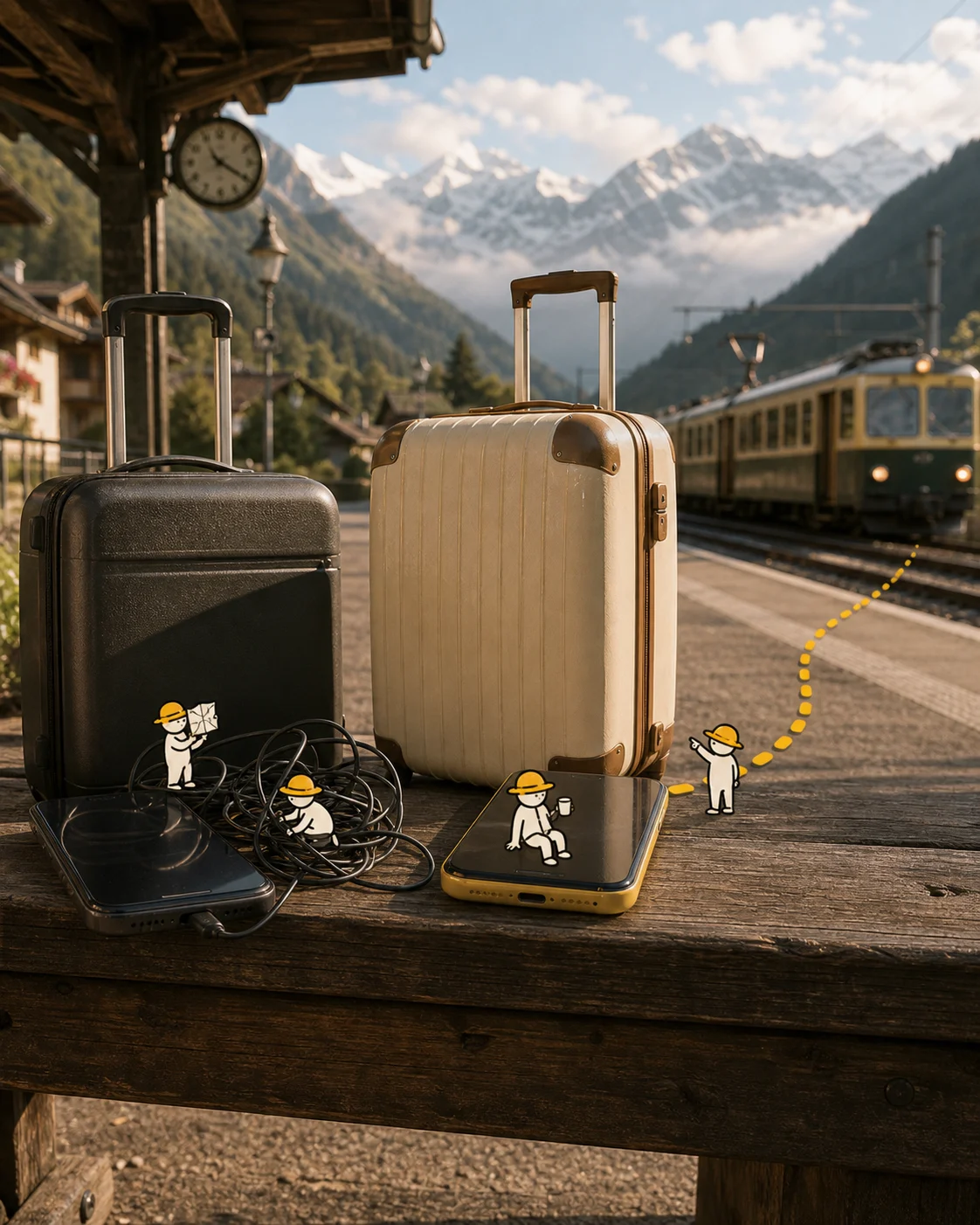
Ordinary roaming packs and travel eSIMs do not cover a ship's satellite-fed mobile service. Use aeroplane mode at sea, ship Wi-Fi if needed and mobile data in port.
Disclosure. We are The SIM Shop, an Australian travel eSIM retailer. A travel eSIM does not fix this problem either, and we say so below rather than at the end. We wrote this because it is the most expensive gap in Australian roaming and almost nobody covers it.
Roaming works because your phone finds a mobile network belonging to a carrier your carrier has an agreement with. In France it finds a French network. In Japan it finds a Japanese one.
In the middle of the Pacific there is no ordinary land-based partner network to find. Some ships carry their own mobile service, fed by satellite. Your phone can see that signal, show bars and connect even though the service sits outside the roaming pack you bought.
That is the trap. The phone can look like it is working normally. Telstra says it sends an SMS with the applicable pay-as-you-go rates on compatible services, but bars on the screen are not proof that your pack covers the network.
Telstra puts the reason plainly on its own page: cruise ships use satellite rather than a mobile network, and so the usage is not covered.
Checked 3 September 2026.
| At sea, cruise ships | In flight | |
|---|---|---|
| Telstra | Explicitly not covered by Day Pass. “Cruise ships utilise satellite services rather than a mobile network” | Not addressed on the page we checked |
| Optus | Consumer standard roaming lists data at A$2/MB in maritime environments; Enterprise packs exclude maritime use | Consumer standard roaming lists data at A$2/MB in aerospace; Enterprise packs exclude aeromobile use |
| Vodafone | No explicit exclusion found on the page we checked | Sold as an inclusion: included data, calls and texts on selected flights with participating airlines for $5 extra a day |
Two honest caveats about that table.
The Optus consumer and Enterprise pages describe different products. The consumer page publishes a standard A$2 per MB data rate for maritime and aerospace use. The Enterprise page says Enterprise Daily Roamer Packs exclude satellite, maritime and aeromobile use. Neither statement means your own roaming pack includes the service, so check the exact plan attached to your number.
Vodafone not stating an exclusion is not the same as covering it. We looked and did not find explicit maritime wording. Absence of a statement is not a guarantee, and we are not going to present it as one.
For the ordinary land-based version, our Telstra vs Optus vs Vodafone international roaming comparison sets out the daily packs and trigger events, while what roaming costs if you do not set anything up covers the pay-as-you-go fallback.
This is the part that surprised us.
Aircraft mobile services run on their own onboard equipment, and how your carrier treats them varies more than anything else in this article.
Optus lists consumer standard data in maritime and aerospace at A$2 per MB. Its Enterprise Daily Roamer Pack wording excludes aeromobile use and says separate charges apply.
Vodafone goes the other way and sells it as a $5 a day add-on, on eligible plans, on selected flights, with participating airlines. Three qualifiers, all of which matter.
So the answer to “does my roaming work on the plane” is genuinely different depending on who you are with, and it is one of the few places in Australian roaming where that is true.
The practical version: if you are with Vodafone and the flight participates, you can pay a known amount. Optus publishes a consumer standard data rate of A$2 per MB in aerospace environments. If you intend to use a paid daily service, check when your roaming day starts before connecting. On any other plan, do not assume onboard mobile is included, and use the aircraft’s own wifi product instead if you need to be online.
We sell travel eSIMs. They do not work in the middle of the ocean, and pretending otherwise would be a good way to sell one order and lose a customer.
A travel eSIM connects to local mobile networks at your destination, the same way roaming does. It has the same physics problem: no land-based network within range means no connection, whatever is installed on your phone.
Where a travel eSIM does help on a cruise is in port. Most itineraries spend a good part of each day tied up somewhere with normal mobile coverage, and a plan covering those countries works exactly as it would if you had flown in. A Mediterranean cruise stopping in Spain, Italy and Greece is a regional Europe plan working normally for the hours you are ashore.
Where it does not help is between ports, which is where people run up the bill.
The days ashore are a separate decision from internet at sea. A travel eSIM may be useful in a covered port when the selected plan can connect to a supported land-based network. Check every port country and the plan’s validity, and keep shipboard connectivity separate. Do not treat a country name on the coverage list as permission to use maritime roaming.
Three options, in the order most people should consider them.
What does not work is leaving the phone on normal settings and hoping the pack covers it. On Telstra’s own wording, it does not.
The setup we describe in keeping your Australian number working overseas still applies, with one addition: at sea, turn the Australian line’s mobile data off and avoid letting the handset register on the ship’s network for calls if you can. Receiving a text is free on land-based roaming, and a maritime service is not the environment those rules were written for.
No. Telstra states cruise ships use satellite services rather than a mobile network, so talk, SMS and data on cruise ships are not covered by Day Pass.
Optus’s consumer page lists standard maritime data at A$2 per MB, while its Enterprise Daily Roamer Packs exclude maritime usage. Neither is ordinary pack inclusion. Check your specific plan before sailing.
It depends who you are with. Optus lists consumer standard aerospace data at A$2 per MB and excludes aeromobile use from its Enterprise packs. Vodafone sells in-flight use on eligible plans and selected flights with participating airlines for A$5 extra a day.
Not at sea. Travel eSIMs connect to ordinary land-based partner networks, which are usually out of range mid-ocean. In port, yes, normally.
The ship’s own wifi package, or nothing until you are in port.
Aeroplane mode while at sea, with wifi on for the ship’s network if you have paid for it.
Because there is a signal. It is the ship’s own satellite-fed service, and it is not the kind of network your pack is written for.
For a long voyage where you need to be contactable, usually. For a short one with daily port stops, often not.
Telstra’s consumer cruise guidance says Upfront international roaming is not compatible at sea, while some other plans such as Pre-Paid may connect at A$3 per MB and receive a rate SMS. Telstra’s international roaming page separately confirms cruise-ship usage is outside Day Pass. Optus’s current consumer international roaming page lists standard data at A$2 per MB in maritime and aerospace environments. Its Enterprise maritime and satellite page excludes satellite, maritime and aeromobile use from Enterprise Daily Roamer Packs. Vodafone’s international roaming page confirms selected in-flight access for eligible plans and participating airlines at A$5 extra a day. We found no explicit maritime inclusion or exclusion on the Vodafone page checked, which is not the same as coverage. All sources were checked 3 September 2026. Carrier terms change without notice; check your own plan before you travel.
Written by Lachlan, who runs The SIM Shop from Brisbane and answers the support email himself.
Email us your destination, trip length and the roaming option you are weighing up. We will help you compare the useful details. hello@thesimshop.com.au